
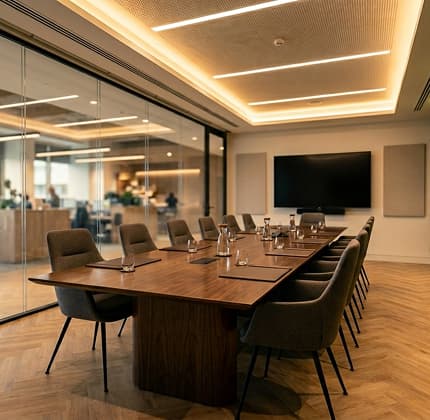
13+ Modern Conference Room Interior Design Ideas That Top Companies Use
23 Apr, 2026
Have you ever walked into a conference room and immediately felt your energy drop? Stiff plastic chairs, harsh fluorescent lighting, a table that takes up the whole room, and walls so bare they feel like a waiting area at a government office. Not exactly the kind of place where great ideas are born.
Now picture the opposite. Walking into a well-lit room with natural textures, comfortable seating, a crisp display screen, and a calm color palette that somehow makes you want to think. That is what thoughtful conference room interior design actually does. It sets the tone before a single word is spoken.
Companies like Google, Apple, and Microsoft do not spend money on beautiful meeting spaces just for show. Researchers confirm that companies investing in adaptable, well-designed meeting spaces see a measurable boost in both employee satisfaction and productivity. The design of a room influences how people feel, how long they focus, and how well they collaborate.
Whether you are redesigning a single boardroom, outfitting a new office floor, or simply trying to make a small meeting room feel less suffocating, this guide gives you 13+ practical conference room design ideas that real companies use today.
Before You Pick a Single Chair, Ask Yourself These 4 Questions
Jumping straight into design trends without a clear brief is one of the most common (and expensive) mistakes in office planning. Before you choose a single piece of furniture or a paint color, take a few minutes to answer these questions honestly.
1. How many people typically use this room?
A small meeting room for 4 to 6 people has very different needs from a boardroom that seats 14. Trying to design both with the same approach leads to a room that serves neither well.
2. What types of meetings happen here most often?
Brainstorming sessions need writable surfaces and flexible seating. Client presentations need a strong display wall and polished finishes. Hybrid video calls need proper cameras, microphones, and dual screens. Know your most common meeting type and design for that first.
3. What does your brand say about who you are?
Apple's conference rooms reflect their product design: clean, minimal, and precise. Nike's spaces carry athletic energy and bold color. Your conference room is not a neutral space. It makes a statement whether you plan it or not. Better to plan it.
4. What is your realistic budget?
Conference room fit-out costs in Bangladesh vary significantly depending on room size, material quality, and technology level. Based on current market rates in Dhaka, commercial interior work is generally priced at BDT 1,200 to BDT 3,000 per square foot for the fit-out itself. Once you add furniture and AV equipment on top, here is a realistic picture:
Note: Costs in Chittagong typically run 10 to 15 percent lower than Dhaka. The government also levies 15% VAT on materials and 5 to 10% on services, so always confirm whether your contractor's quote is VAT-inclusive or exclusive. That difference alone can add BDT 50,000 to 1,00,000 or more on a medium-sized project. Knowing your number upfront saves you from falling in love with ideas that are genuinely out of reach right now.
Once you have answered these four questions, you are ready to look at design ideas with a clear filter.
13+ Conference Room Interior Design Ideas Worth Stealing
These are not just aesthetic concepts. Each idea comes with a practical explanation of why it works, which companies use it, and how you can apply it at your scale.
1. Bring Nature In: The Biophilic Design Approach
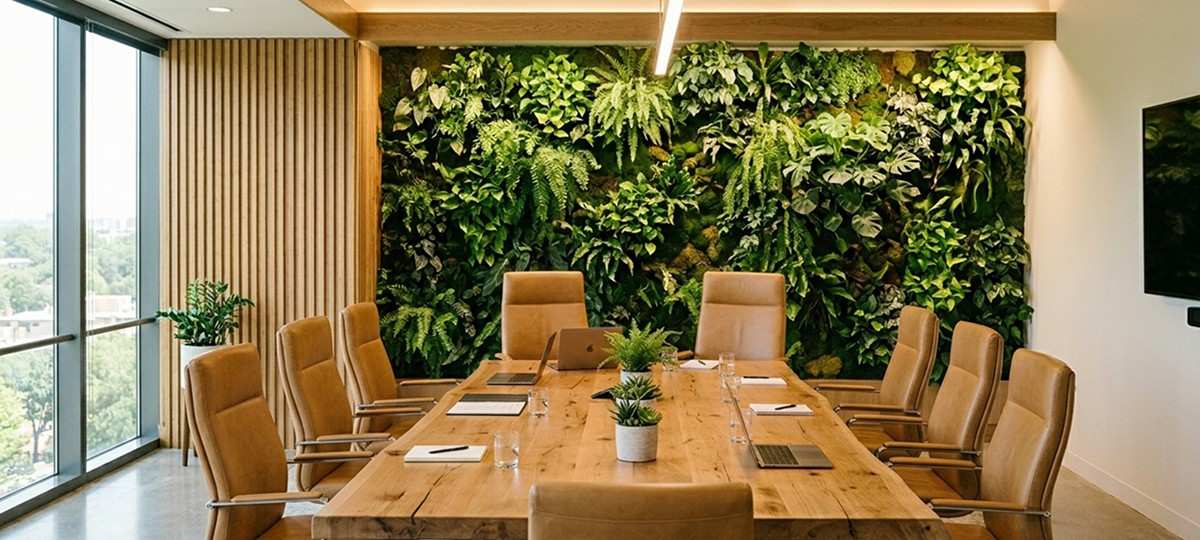
Biophilic design is the practice of incorporating natural elements into a built environment. In a conference room, this means plants, natural wood textures, stone surfaces, organic fabrics, and wherever possible, natural daylight.
This is not just a trend. Studies on biophilic office environments consistently link nature-integrated spaces with lower stress, sharper focus, and better retention of information during long sessions.
Amazon's "Spheres" campus in Seattle and Google's garden-integrated offices are the most widely cited examples of biophilic design done at scale. But you do not need Amazon's budget to apply the same principles. A reclaimed wood conference table, a preserved moss wall panel, and a few low-maintenance plants like snake plants or pothos can shift the atmosphere of a room significantly.
How to apply it:
-
Start with 2 to 3 indoor plants that thrive under standard office lighting
-
Replace a laminate table surface with reclaimed wood or a wood-veneer finish
-
Use stone or concrete texture on one accent wall
-
Maximize any available window exposure when choosing the room's location
If you’re more concerned about the walls, you can check out the dedicated discussion on wall interior design ideas .
2. Remote Worker Friendly Conference Room Interior Design
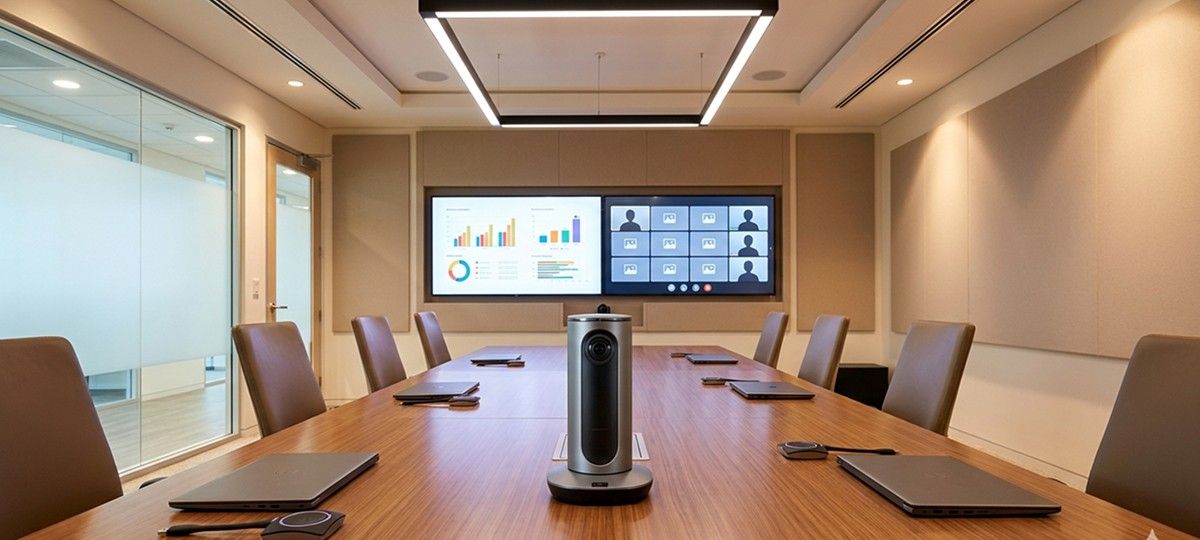
This is arguably the most important design challenge of the current decade. With teams split across offices, home setups, and different time zones, a conference room that only serves the people physically present is doing half its job at best.
According to Cushman and Wakefield's Experience per Square Foot survey, 56% of remote workers feel less connected to colleagues without deliberate design support. That is not a Wi-Fi problem. It is a design problem.
Companies like Microsoft, Zoom, and Cisco have built entire product ecosystems (Teams Rooms, Zoom Rooms, and Webex Devices) specifically to solve this. The shared principle across all of them is straightforward: every remote participant should be visible at near-face size, and every voice in the room should be captured with equal clarity.
How to apply it:
-
Install a 360-degree HD camera at the center of the table rather than at the far end
-
Use dual screens so one shows content and the other shows remote participants
-
Invest in a ceiling microphone array for full-room audio coverage
-
Use a wireless screen sharing tool like Barco ClickShare so anyone can present without plugging in a cable
3. Less Is More: The Minimalist Conference Room Design
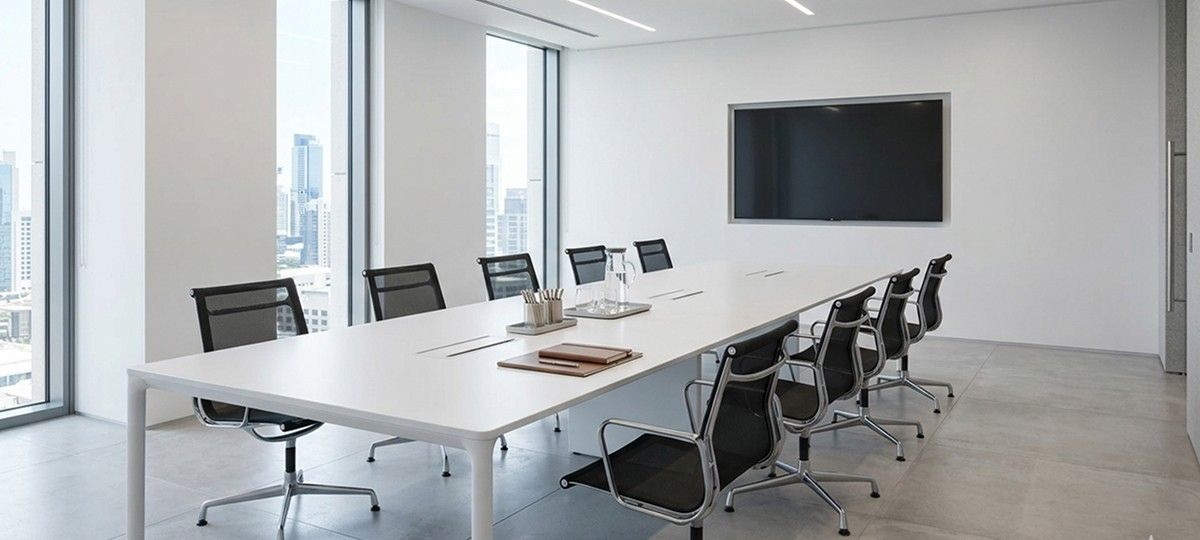
Minimalist design is about intentionality. Every element in the room earns its place. Nothing is decorative without purpose. The result is a space that feels calm, focused, and authoritative without being cold.
This approach works especially well for boardrooms, legal offices, financial institutions, and executive meeting spaces where clear thinking and formal presence matter most.
Apple's internal meeting rooms and IKEA's Scandinavian-influenced office spaces both reflect minimalist conference room principles. The design communicates precision and clarity before a single presentation begins.
How to apply it:
-
Limit your color palette to 2 or 3 tones: white, soft gray, and one neutral accent
-
Use concealed cable management so no wires are visible on the table surface
-
Remove everything from the room that does not serve a specific function
-
Choose chairs with clean, simple profiles rather than ornate or visually heavy designs
4. Design The Conference Room That Changes Shape
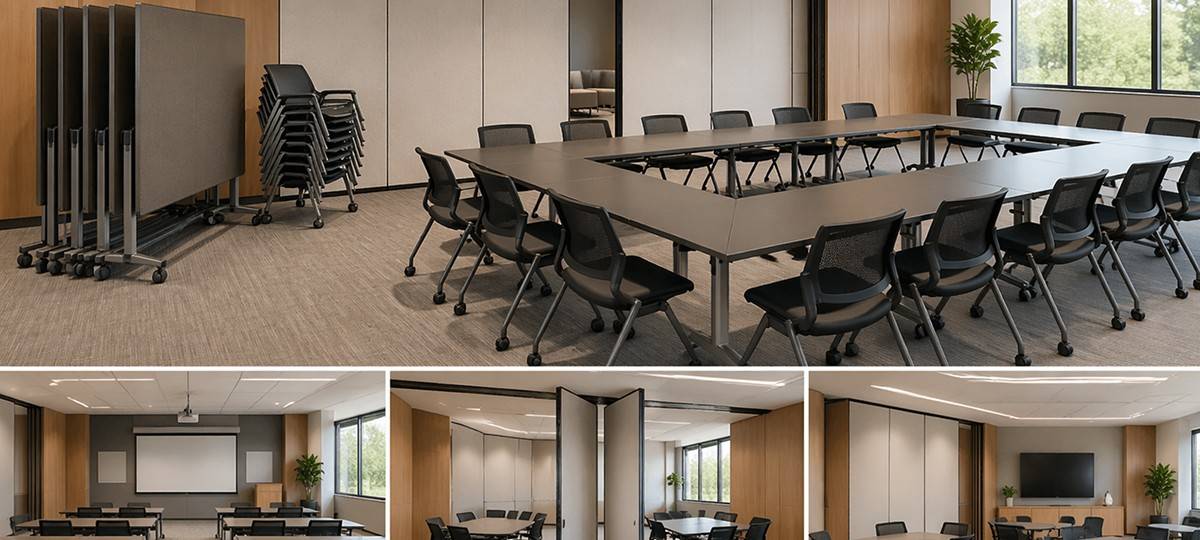
One of the most wasteful things in office design is a large conference room that sits at 20% capacity for most of the day. A small team books the big boardroom for a 4-person sync, and the people who actually need the full space cannot find an open slot.
Flexible, modular conference room design solves this. Moveable walls, stackable chairs, folding tables, and reconfigurable furniture systems let one space become a training room in the morning and a focused huddle space by the afternoon.
Herman Miller and Steelcase both manufacture complete systems built for adaptive meeting environments. WeWork popularized the concept at commercial scale by demonstrating how a single footprint could serve multiple configurations throughout a working day.
How to apply it:
-
Invest in chairs that stack and fold for easy repositioning and storage
-
Use tables with locking casters so they can be moved and reset quickly
-
Consider operable wall panels that divide one large room into two smaller ones
-
Post a laminated layout card showing 2 or 3 pre-set configurations so staff can reset the space without guesswork
Read More: 15 Small Office Interior Design Ideas
5. Modern Conference Room with Layered Lighting
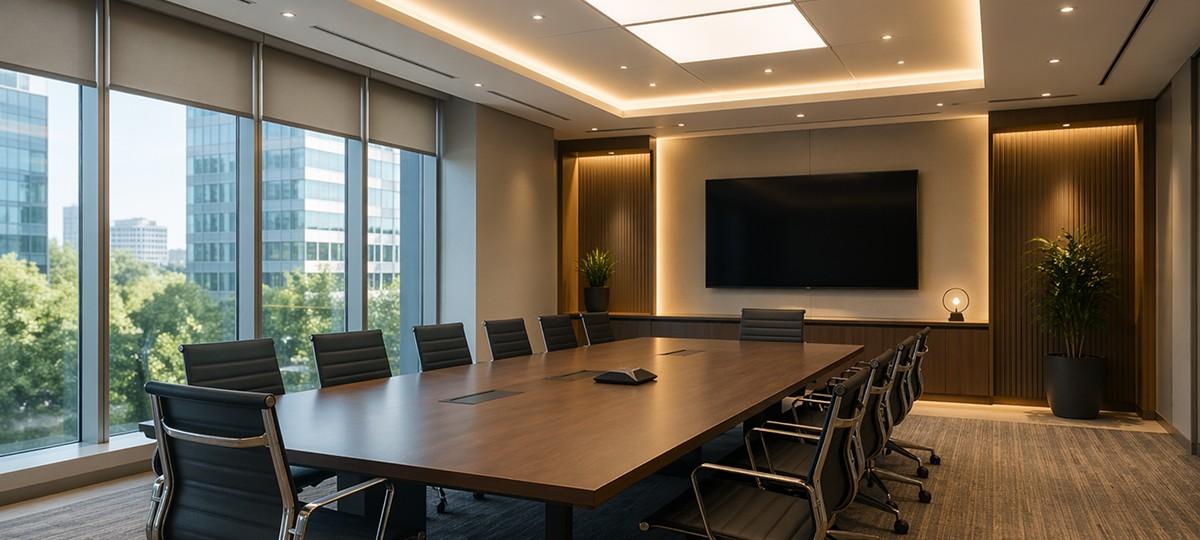
Lighting is one of the most underestimated elements in conference room design. Yet it is also one of the first things people notice when it is wrong.
Harsh, cool-white fluorescent lighting increases fatigue and visual discomfort during long sessions. Rooms with no natural light feel closed and draining. Well-layered lighting, by contrast, helps people stay alert, read visual content accurately, and feel physically comfortable through a two-hour meeting.
The best modern conference rooms use a layered approach: natural daylight where room placement allows it, dimmable ambient LED panels (ideally in the 3,000 to 4,000 Kelvin color temperature range for balanced white light), and accent or task lighting for display areas.
How to apply it:
-
Replace fluorescent tubes with LED panels and add a dimmer switch at the door
-
Position presentation-focused rooms on the window-facing side of the building where possible
-
Install blackout blinds or motorized shades for display-heavy sessions that need a darker environment
-
Consider a circadian lighting system that adjusts color temperature gradually through the day
6. Sustainable Eco-Friendly Interiors
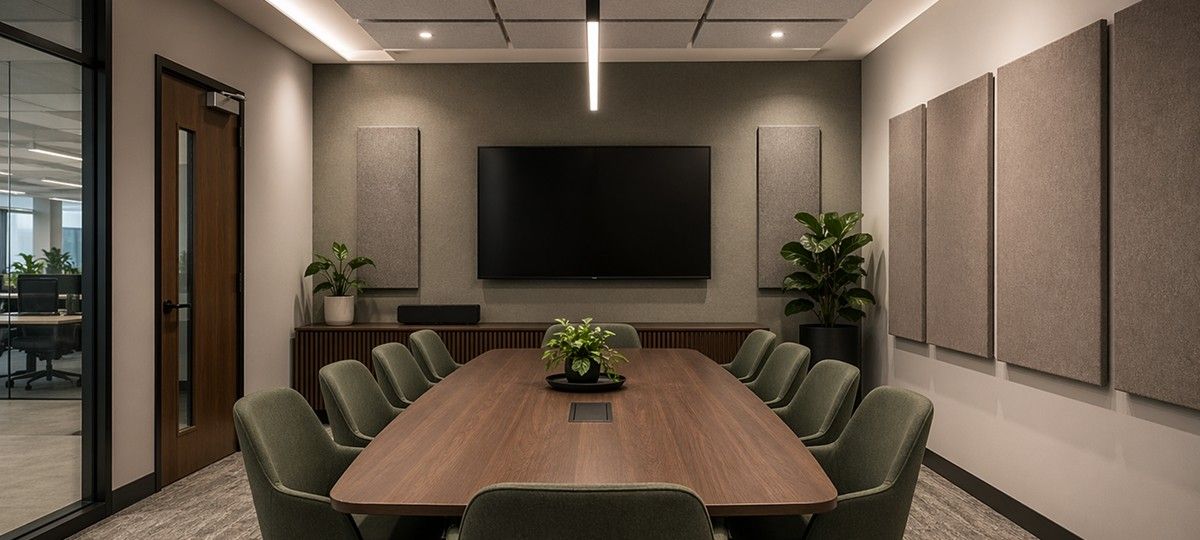
Echo, background noise bleeding in from an open-plan office floor, and voices that cut out mid-sentence are among the most consistently complained-about problems in both in-person and hybrid meetings.
Acoustic design is not glamorous. But it may be the single most functional improvement you can make to an existing conference room. Sound management works at multiple levels: absorbing echo within the room (through acoustic ceiling tiles, fabric wall panels, upholstered seating, and carpet), blocking sound from entering and leaving (through proper wall insulation and sealed door frames), and improving audio capture (through noise-cancelling microphone arrays).
How to apply it:
-
Add acoustic ceiling tiles or suspended fabric panels to absorb overhead echo
-
Mount fabric-covered acoustic panels on at least two of the room's walls
-
Use upholstered seating rather than hard plastic or metal chairs
-
Install a door seal strip to minimize sound leakage to the surrounding open-plan area
7. Brand-Integrated Conference Room Design
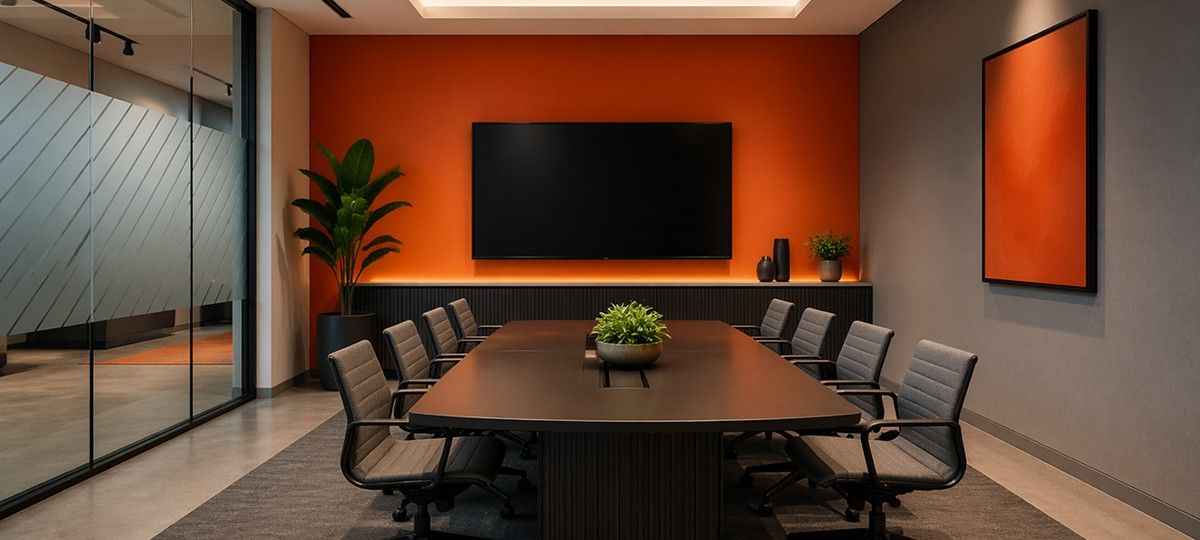
When a client walks into your conference room for the first time, the space communicates before anyone speaks. The question is whether it is saying something intentional or something accidental.
Brand-integrated conference room design means using your company's visual identity, color palette, values, and materials as design inputs rather than defaulting to generic corporate finishes.
Nike's meeting spaces carry the same athletic energy that runs through every product they make. Apple's rooms mirror their hardware: minimal, precise, and carefully considered. Pernod Ricard's Paris offices feature conference rooms where each space has a unique character directly tied to the brand's spirit of creating convivial, authentic experiences.
How to apply it:
-
Apply your brand's primary accent color to one feature wall
-
Use your logo subtly: etched into a glass partition, printed on a floor mat, or embedded in a light panel
-
Display a framed version of your company mission or core values in a visible spot
-
Match chair fabric or table surface finish to your established brand palette
8. Conference Room Interior Design with Glass Walls
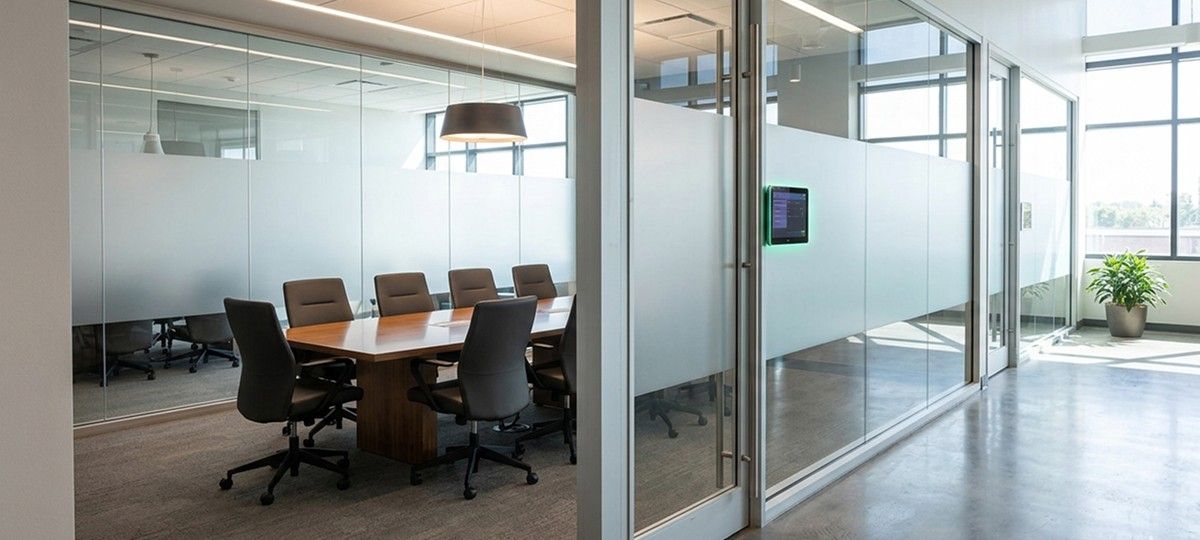
Glass-walled conference rooms have become a defining feature of modern office interior design , and for good reason. They allow natural light to travel deeper into the building, reduce the closed-in feeling of solid-wall rooms, and signal openness and transparency as cultural values.
From a practical standpoint, they also make it easy to see at a glance whether a room is occupied, cutting down on that familiar moment of opening a door only to find a meeting already in progress.
For rooms that need privacy, the solution is straightforward: acoustic-grade glazing handles soundproofing, and frosted vinyl film or switchable smart glass (which frosts on demand with a single control tap) handles visual privacy when required.
How to apply it:
-
Replace at least one solid wall with full-height glass if your layout allows it
-
Add a switchable privacy film for rooms where confidentiality is a regular requirement
-
Pair glass walls with a quality door seal to maintain acoustic separation from the open floor
-
Mount a room booking display panel on the glass outside the door
9. Tech-Forward AV Design
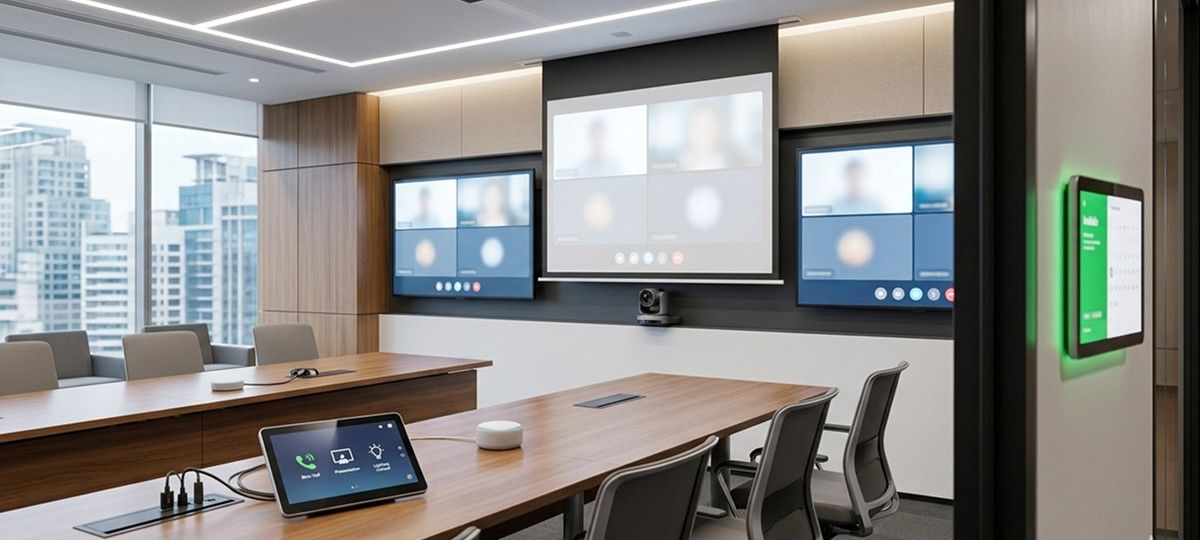
Think about the last time you spent 8 minutes at the start of a meeting trying to get the screen to connect. Or the time someone had to call IT just to share a presentation. Smart conference room automation is not about technology for its own sake. It is about removing the friction that kills meeting momentum.
In a well-automated conference room, pressing one button can turn on the displays, set the lighting level, lower the projection screen, activate the camera, and connect to the video call simultaneously. Crestron and Extron are the industry-standard systems for this kind of integrated room control. Voice-activated control through Alexa for Business or Google Assistant is increasingly common in higher-spec installations.
For Bangladesh offices, adding a basic smart room automation setup typically adds BDT 3,00,000 to BDT 8,00,000 to a standard medium-sized fit-out, depending on the system complexity and the brands you choose. The productivity return from eliminating daily tech setup delays is real and measurable over time.
How to apply it:
-
Start with a unified touchscreen panel that manages all AV and lighting from one interface
-
Use a certified hardware kit for your primary platform: Teams Rooms, Zoom Rooms, or Google Meet
-
Add a smart booking display outside the door so availability is always visible without checking an app
-
Consider voice control for high-traffic rooms to improve accessibility and reduce setup time
Read More: Luxury Bedroom Interior Design : Top 8 Trends for 2026
10. Brainstorming Friendly Interior Design for Conference Room
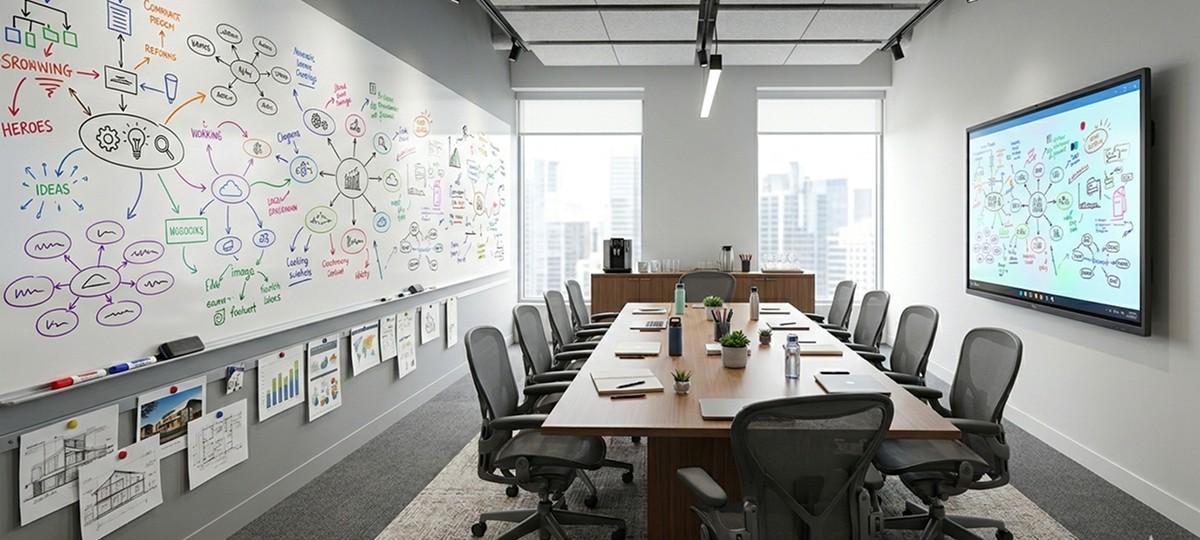
There is something that happens in a brainstorming session when people can write freely on a large surface. Ideas get captured in real time, connections get drawn literally, and the whole group can see and build on what is emerging. A laptop screen does not replicate that.
Full-wall writable surfaces are becoming a standard feature of collaborative conference rooms. The range runs from traditional whiteboard panels and whiteboard paint (the most affordable option, requiring only a single coat on any flat wall) all the way to interactive digital whiteboards which allow remote participants to annotate and co-create in real time alongside in-room participants.
How to apply it:
-
Apply whiteboard paint to one full wall as a budget-friendly writable surface option
-
Position the writable surface on the wall opposite the primary display so both can be used simultaneously
-
Add a magnetic strip along the bottom of the writable wall to hold printed reference material during sessions
11. Large Meeting Hall Interior Design
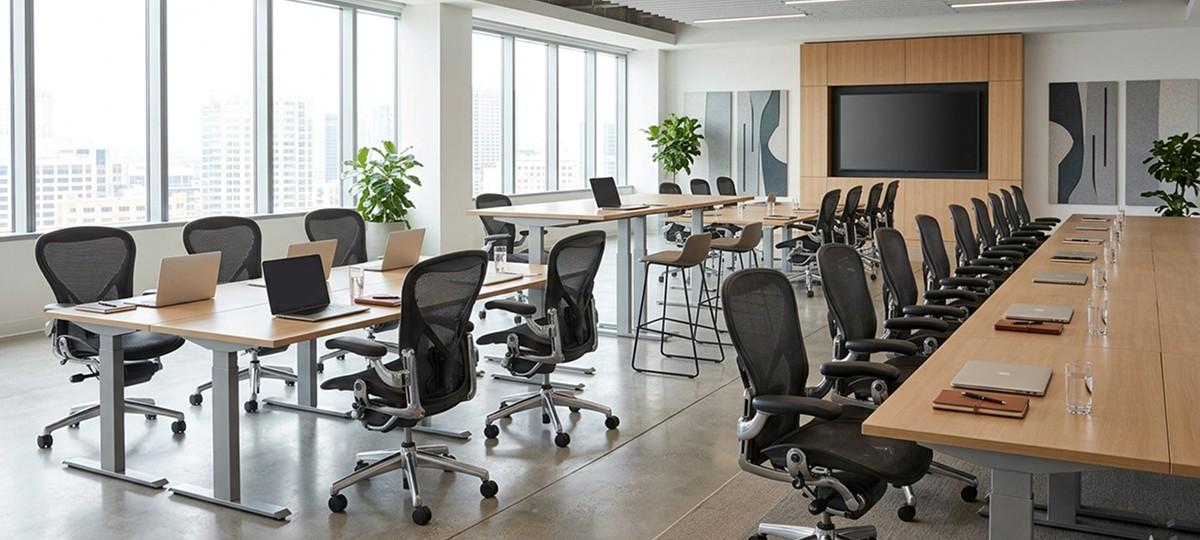
This one sounds obvious, but the number of conference rooms still furnished with cheaply padded, back-punishing chairs is surprisingly high. Physical discomfort directly reduces cognitive performance. When someone is shifting in their seat trying to find a comfortable position, they are not fully present in the meeting.
Johnson and Johnson and Salesforce are among the large companies that have explicitly invested in ergonomic meeting environments as part of their employee well-being programs. The WELL Building Standard, now recognized globally by major real estate and corporate developers, treats ergonomic meeting furniture as a core requirement for certification.
Herman Miller's Aeron and Steelcase's Gesture are the benchmark options in this category. For tables, height-adjustable surfaces allow teams to switch between seated and standing configurations depending on the energy and length of the session.
How to apply it:
-
Prioritize chairs with lumbar support, adjustable armrests, and a seat depth that works for different body sizes
-
Consider at least one standing-height configuration for shorter, higher-energy sessions
-
Choose tables with a smooth, stable surface that accommodates laptops, notebooks, and drinks without wobble
-
Test chairs before purchasing: what looks ergonomic in a product catalog does not always feel that way through a two-hour meeting
12. Themed Room Naming Design
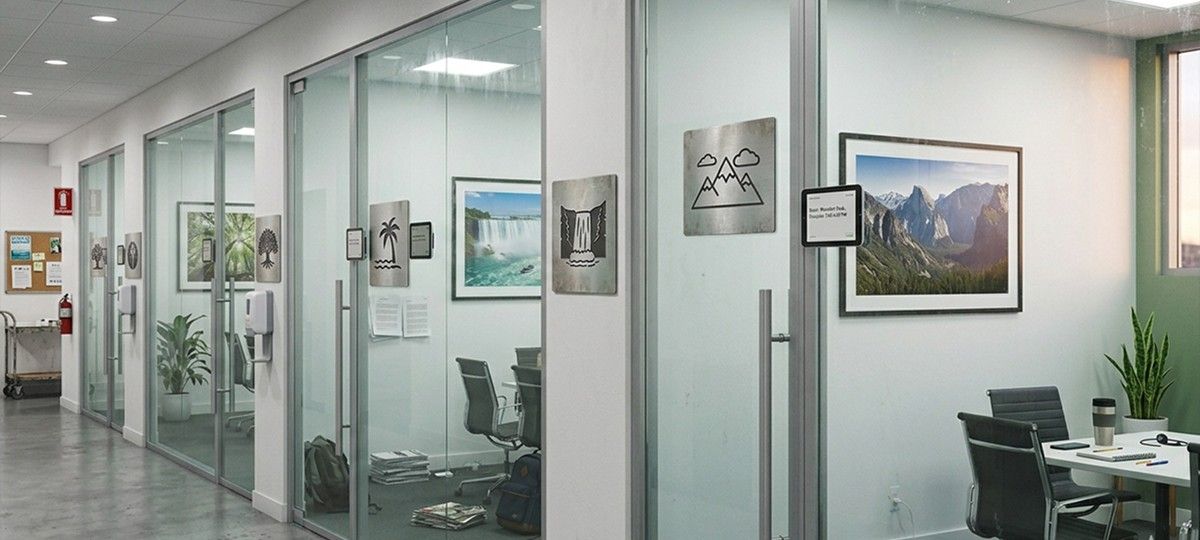
This one is easy to overlook because it does not involve a large budget or a contractor. But naming and lightly theming your conference rooms is a design choice that pays cultural dividends well beyond its cost.
Generic labels like "Room A" and "Room B" communicate nothing. Themed names tied to company culture, geography, or values build identity, help with wayfinding, and make booking a room feel less like a bureaucratic task.
OfficeSpace Software names their rooms after local parks in each country where they operate. "Cahuita" and "Monteverde" for their Costa Rica offices. "Juan de Fuca" in British Columbia, Canada. Each room carries a subtle local character that grounds the brand in the places it calls home.
How to apply it:
-
Choose a theme that reflects something true about your company: cities you operate in, product milestones, natural landmarks, or founding values
-
Apply one simple design cue to reinforce the theme: a framed photograph, a color accent, or a texture reference
-
Print a consistent nameplate for every room using the same font and format to maintain visual coherence across the office
13. Compact Huddle Room Design
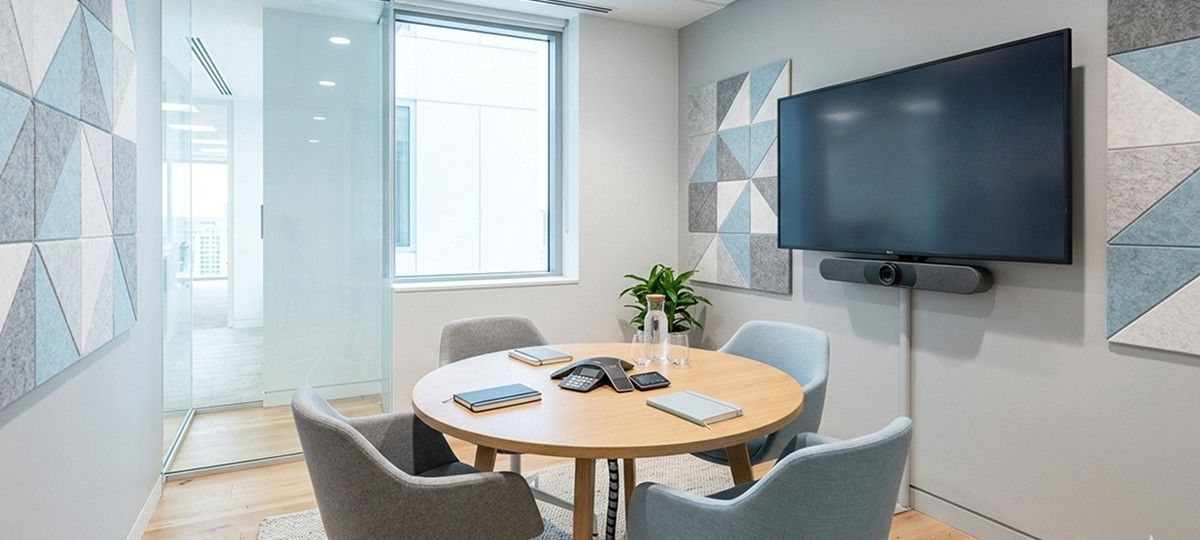
Not every meeting needs a 12-person boardroom. In fact, most do not. Post-pandemic meeting behavior has shifted significantly toward smaller, more intentional gatherings. Many companies are responding by replacing one or two large, underused conference rooms with multiple compact huddle rooms that are always available and purpose-built for quick, focused sessions.
A well-designed huddle room for 2 to 6 people does not require complex design. It needs a small table, comfortable seating, one reliable display, decent audio, and clean cable management. Keep the design intentional and uncluttered.
How to apply it:
-
Use a round or square table to maximize sightlines in a small footprint
-
Mount the display on the wall rather than using a projector to preserve floor space
-
Keep the color palette light and airy to avoid a cramped feeling
-
Install acoustic treatment even in small rooms: sound management matters more at close range, not less
14. The Eco-Conscious Conference Room
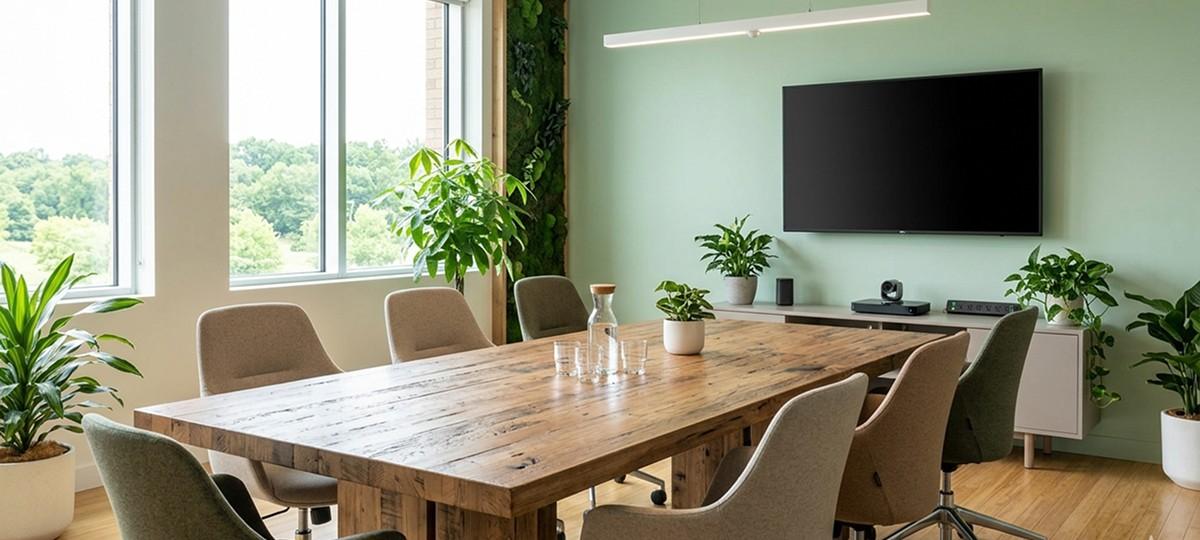
Sustainability has moved from a "nice to have" to a core commitment in how forward-thinking companies approach workspace design. Most Fortune 500 companies now include workspace sustainability in their ESG reporting, and conference rooms are a visible part of that picture.
Eco-conscious conference room design covers material choices (recycled or reclaimed wood, bamboo, organic fabric upholstery, and low-VOC paints) alongside technology choices (LED lighting with motion sensors, smart HVAC integration, and energy-efficient AV equipment).
How to apply it:
-
Switch fluorescent lighting to LED with motion sensors that power off automatically when the room empties
-
Source at least one furniture piece from a supplier using recycled or sustainably certified materials
-
Choose low-VOC paint for your next repaint cycle to improve indoor air quality
-
Install a smart power strip that cuts standby power to AV equipment when the room is not in use
We believe at least one of these 14 modern conference room interior design ideas will catch your attention. However, if you’re still searching for something innovative, you can consult with the professionals of the best interior design companies in Dhaka . They’ll get you the exact solution you’ve been looking for.
Conference Room Layout Ideas: Which Setup Fits Your Meeting Style?
No layout is universally correct. The best setup depends on what happens in the room most often, not on what looks most impressive in a floor plan.
One practical note: design your conference room for the average meeting, not the largest one you might ever host. If your most common session involves 6 people, do not optimize the entire space around the quarterly all-hands that happens twice a year.
The Modern Conference Room Technology Checklist
Before spending money on technology, check whether your infrastructure can actually support it. A great camera is useless on a network that drops every 20 minutes.
-
Wireless presentation system so anyone can share their screen in seconds (Barco ClickShare, Apple AirPlay, and Chromecast are the leading options)
-
Video conferencing hardware certified for your primary platform: Teams Rooms, Zoom Rooms, or Google Meet hardware kits
-
Interactive whiteboard or large touchscreen display for real-time collaboration and annotation
-
Ceiling or tabletop microphone array with echo cancellation for full-room audio coverage
-
High-quality conference speaker for clear and consistent audio output across the room
-
Smart room booking display mounted outside the door, synced with Google Workspace or Office 365
-
Lighting automation controller for single-touch or voice control of room settings
-
Concealed cable management with sufficient power outlets integrated into the table surface
What technology does a modern conference room need?
The essential technology for a modern conference room includes a wireless presentation system, HD video conferencing hardware certified for Zoom or Microsoft Teams, an acoustic microphone array, and a smart booking display. For hybrid teams, add a 360-degree camera and dual screens so remote participants are never treated as an afterthought.
Frequently Asked Questions
What is the 3-5-7 rule in interior design?
The 3-5-7 rule says objects look more visually appealing when grouped in odd numbers: three, five, or seven. The human eye finds odd groupings more dynamic and engaging than even ones. In a conference room, you can apply this when arranging decor on a credenza, positioning plants around the room, or placing accent lighting above a feature wall.
How to style a conference room?
Start with a clear focal point, usually the display wall, and build everything else around it. Stick to a palette of no more than three tones: a neutral base, a secondary furniture tone, and one accent color for personality. Layer your lighting with ambient, task, and accent sources. Finally, add at least one textured element like a wood surface, fabric panel, or live plant to keep the space from feeling flat and sterile.
How big is a 20 person conference room?
A 20-person conference room requires approximately 45 to 60 square meters (480 to 650 square feet) of usable floor space. The standard planning guideline is 2 to 2.5 square meters per seated person, plus additional clearance for circulation, a display wall, and any technology cabinet. A table of roughly 6 to 7 meters in length works well for a rectangular boardroom layout at this capacity.
What is the 80/20 rule in decorating?
The 80/20 rule suggests that 80 percent of a room should use neutral, foundational elements like walls, flooring, and core furniture, while the remaining 20 percent carries the visual character through accent colors, textures, and decorative details. For conference rooms, this means keeping most surfaces calm and non-distracting, then using brand colors or bold finishes selectively on one feature wall or in upholstery.
What are the 12 principles of interior design?
The 12 core principles are: balance, emphasis, contrast, rhythm, proportion, scale, unity, harmony, movement, pattern, texture, and space. Together they guide how a room is structured visually and functionally. In conference room design, the most directly relevant ones are balance (furniture arrangement), emphasis (focal point), proportion (table and screen sizing), and space (avoiding overcrowding so the room feels calm and easy to think in).
Ending Note
A conference room is not just a room. It is the space where clients form their first impression of your company in person. It is where your team does its best collective thinking. It is where your culture either shows up clearly or disappears behind four blank walls.
The good news is that you do not need an unlimited budget or a complete office overhaul to make a meaningful difference. Even one or two of the ideas in this guide, applied with intention, can shift how a space feels and how people perform within it.
Start small if you need to. Fix the lighting. Add an acoustic panel. Replace the chairs. Then build from there. The best conference room designs are not built for today's meetings only. They are built with enough flexibility to adapt as your team, your tools, and your ways of working keep evolving.
Related Blogs
More Insights for You
Sollicitudin adipiscing id non lorem. Sit egestas nisi amet ipsum gravida mauris aliquam. Mattis eget rutrum adipiscing iaculis.
23 Mar, 2025
Wall Decoration Ideas Beyond Wall Tiles: Decor with Creativity
08 Apr, 2025
Creative Home Decor Ideas for Small Spaces and Bengali Homes
22 Apr, 2025
Wall Interior Design Ideas: Modern Looks for a Stylish Home
23 Apr, 2025
Top 12 Duplex House Design In Bangladesh that You’ll Love
13 May, 2025
Drawing Room Decoration in Bangladesh: Your Dream, Our Idea
19 May, 2025
Smart and Affordable Office Interior Design Tips Bangladesh
22 Jun, 2025
Luxury Bedroom Interior Design: Top 8 Trends for 2025

26 Jun, 2025
Must-Have Room Decoration Items From Living Room to Bathroom
30 Jul, 2025
Modern Home Decor Ideas to Make Your Home Stand Out
31 Jul, 2025
How to Choose the Best Dinner Wagon for Your Home

04 Aug, 2025
Stylish & Functional Kitchen Design in Bangladesh
11 Aug, 2025
Home Decoration Items in Bangladesh | Where Style Meets Affordability
27 Aug, 2025
Kitchen Cabinet Design Ideas for Bangladesh
14 Sep, 2025
Tiles Design Ideas for Every Room in Bangladesh
25 Sep, 2025
Tiles Texture Ideas for Every Room in Bangladesh 2025
08 Oct, 2025
Tiles Design for Floor Ideas: Living Room, Bedroom, Kitchen, Bath
23 Oct, 2025
Modern Bathroom Tiles in Bangladesh: Styles, Price, and Design Tips
04 Nov, 2025
11 Modern Kitchen Tiles Design Ideas for Bangladeshi Home

20 Nov, 2025
14 Stunning Wall Tiles Design for Bathroom and Kitchen
26 Nov, 2025
11 Attractive Floor Tiles Design for Bangladeshi Homes
28 Dec, 2025
7 Modern Small Bathroom Tiles Design Ideas for Bangladesh (2026 Price Guide)
07 Jan, 2026
9 Stunning Stair Tiles Design Ideas Perfect for Bangladesh Homes
24 Jan, 2026
How to Choose Perfect Bathroom Floor Tiles in 2026
03 Feb, 2026
Wall Kitchen Tiles : Your Complete Guide to Choose the Perfect One
17 Feb, 2026
9 Impressive Bedroom Cabinet Designs for 2026 in Bangladesh
22 Feb, 2026
11+ Modern Balcony Design Ideas in Bangladesh for 2026
16 Mar, 2026
15 Small Office Interior Design Ideas for Compact Spaces
02 Apr, 2026
Dinner Wagon Design: Smart, Stylish Solutions for Modern Dining Spaces
13 Apr, 2026
Top 10 Best Interior Design Company in Dhaka (2026)
18 May, 2026
Interior Ceiling Design in Bangladesh: 12 Types, Materials & Modern Ideas for 2026
21 May, 2026
20 Office Decoration Design Ideas to Elevate Your Workspace
17 Jun, 2026
20+ Modern Stair Design Ideas for Every Home in Bangladesh (2026)
25 Jun, 2026
Wall Cabinet Design in Bangladesh for Bedrooms, Kitchens and Living Rooms
20 Jul, 2026
Flat Interior Design: 15+ Expert Ideas to Maximize Space, Style & Comfort in 2026
23 Jul, 2026
20 Interior Modern Wardrobe Design Ideas for Bedrooms in 2026
17 Aug, 2026
Ceiling Interior Design: Styling Ideas That Transform Any Room
18 Aug, 2026